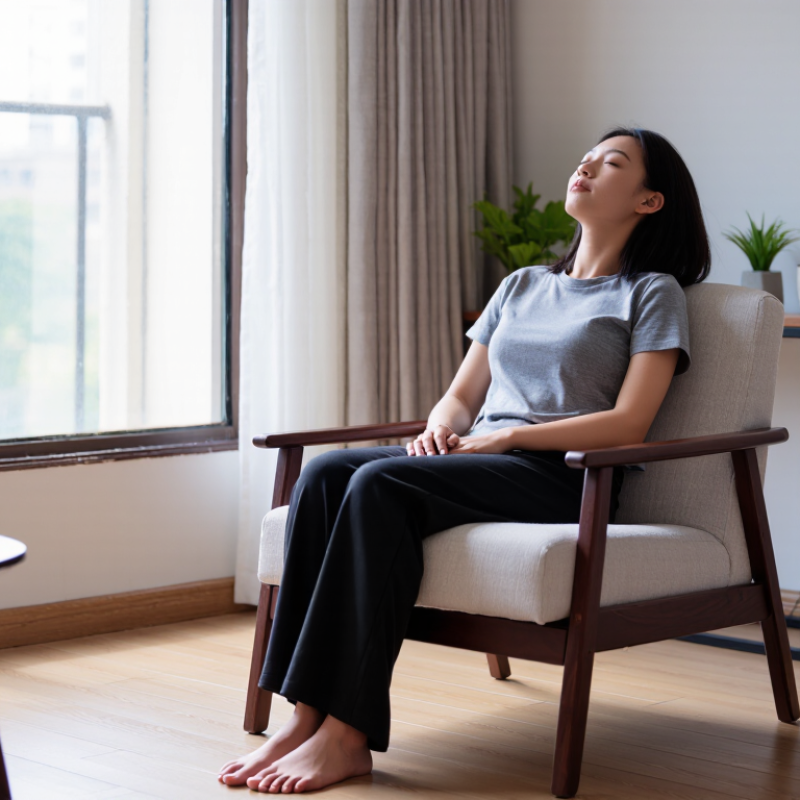
A sudden panic attack can make an ordinary room feel dangerously small. Your heart may pound, your hands may tremble, and each breath can seem incomplete. This guide explains how to breathe to calm an immediate panic attack without promising an instant cure. The aim is steadier breathing, not perfect breathing. That distinction matters. For many people, forcing a deep breath makes dizziness worse. A quieter approach often works better: relax your shoulders, breathe gently through your nose, and let your exhale last slightly longer than your inhale. Keep both feet on the floor.
Clinical psychologist David Carbonell, PhD, has specialized in panic and anxiety treatment for decades. He writes, “Panic is not dangerous, but it feels dangerous.” That sentence can interrupt the frightening story your body is telling you. During an attack, try breathing in softly for about three counts, then out for four or five. Do not strain. Pause only if it feels comfortable. A cool window, a chair beneath your legs, and one familiar object can help anchor your attention.
Small steps count. Very small. If counting increases your fear, stop counting and follow a natural rhythm. Breathing exercises cannot diagnose the cause of chest pain, fainting, or severe breathing difficulty. Seek urgent medical help when symptoms feel new, extreme, or medically uncertain. Even experienced therapists acknowledge that breathing alone may not settle every attack. Practice when calm, notice what your body does, and adjust gently rather than judging yourself.
Define a Panic Attack Using DSM-5-TR’s Four-or-More Symptom Criterion
China Top Guide: How to Breathe to Calm a Panic Attack?
A panic attack is an abrupt surge of intense fear or discomfort. According to DSM-5-TR, four or more symptoms are required for a full panic attack. These symptoms may include a racing heart, sweating, trembling, shortness of breath, choking feelings, chest discomfort, nausea, dizziness, chills, numbness, unreality, fear of losing control, or fear of dying. The symptoms usually peak within minutes. One symptom alone does not meet the criterion.
The World Health Organization reported that anxiety disorders affected about 301 million people worldwide in 2019. This figure includes several conditions, not panic attacks alone. That distinction matters. Panic symptoms can also resemble heart or breathing problems, so new, severe, or unusual symptoms deserve urgent medical assessment. Personal experience shows that slow breathing may reduce over-breathing, but it is not a cure. I may even make symptoms worse if I force deep breaths.
Tips: Sit with both feet on the floor. Relax your shoulders. Breathe gently through your nose for four seconds, then exhale for six. Repeat for one minute. Keep the breath small and quiet. Do not breathe into a paper bag. Name four things you can see, three sounds you can hear, and two physical sensations. If attacks recur unexpectedly, a qualified mental-health professional can assess panic disorder using the full DSM-5-TR criteria, not symptoms alone.
Identify Hyperventilation Signs: Fast Breathing Can Lower Blood CO₂
How to Breathe to Calm a Panic Attack
Fast breathing can create a frightening feedback loop. You breathe rapidly, remove too much carbon dioxide, and may feel dizzy, numb, or unreal. The American Thoracic Society describes 12–20 breaths per minute as a typical adult resting range. During panic, breathing may become much faster and less effective. It can feel like suffocation, even when oxygen levels remain adequate.
Notice the pattern first. Are your shoulders lifting? Is your chest moving quickly? Are you sighing repeatedly? These signs may suggest hyperventilation. Sit with both feet supported. Relax your jaw. Breathe gently through your nose for about four seconds, then exhale slowly for six seconds. Do not force a deep breath. A quiet breath is often safer than a large one.
Try this for one minute.
Clinical breathing research commonly links slower breathing with reduced arousal, but personal responses vary. I sometimes see people over-control each breath, which can increase fear. That part deserves honest reflection. The aim is not perfect counting. It is softer, steadier breathing. If dizziness increases, return to normal breathing and seek medical guidance. Avoid breathing into a paper bag. It can be unsafe when asthma, heart problems, or another medical condition is involved. Emergency symptoms, including fainting, severe chest pain, or blue lips, require urgent care. Sources: American Thoracic Society clinical guidance; National Health Service panic-attack guidance; 2023 clinical review of hyperventilation and carbon dioxide changes.
Sit Safely and Screen for Emergency Symptoms Before Breath Control
China Top Guide: How to Breathe to Calm a Panic Attack?
Sit Safely and Screen for Emergency Symptoms Before Breath Control
Sit on the floor or a stable chair, with your back supported and feet flat. Move away from stairs, traffic, hot surfaces, and crowded spaces. Before controlling your breath, check the danger signs. New or crushing chest pain, severe breathing difficulty, fainting, blue lips, confusion, one-sided weakness, or symptoms spreading to the arm or jaw require urgent medical help. Do not assume panic is the cause. The American Heart Association warns that heart attack symptoms can include chest discomfort, shortness of breath, nausea, and cold sweating. If symptoms are sudden, severe, or unfamiliar, contact local emergency services and do not drive yourself.
If no emergency signs appear, soften the breathing rather than forcing deep breaths. Inhale gently through the nose for about three seconds, then exhale slowly for four to six seconds. Keep your shoulders loose. Watch the exhale, not the clock. Stop if dizziness, tingling, or breathlessness increases. Paper-bag breathing is unsafe when the cause is unclear because it can reduce oxygen during some medical emergencies. The World Health Organization reported that 301 million people lived with anxiety disorders in 2019, showing how common distress can be, but common does not mean harmless.
A calm voice can help: “This feels frightening, but I am checking my safety.” Yet breathing exercises are not a diagnosis. I sometimes make counting too strict; that can create another task to fear. A slower, comfortable rhythm is better than perfect numbers. Repeated attacks deserve assessment by a qualified clinician, especially with heart, lung, or pregnancy-related concerns.
Use Diaphragmatic Breathing with a 4-Second Inhale and 6-Second Exhale
How to Breathe to Calm a Panic Attack?
Panic can make breathing feel fast, shallow, and uncontrollable. Diaphragmatic breathing offers a practical reset. Place one hand below your ribs and keep your shoulders relaxed. Inhale gently through your nose for four seconds. Let your abdomen expand, rather than lifting your chest. Then exhale slowly for six seconds through softly parted lips. The longer exhale may support a calmer autonomic response, but it should never feel forced.
Repeat this pattern for two to five minutes. Imagine filling a small balloon beneath your ribs. Keep the breath quiet and steady. If counting increases your anxiety, shorten the cycle without holding your breath. A 4-second inhale and 6-second exhale creates about six breaths per minute, a pace commonly used in breathing research. The American Heart Association has also discussed controlled breathing as a method that may influence autonomic regulation.
It may not work instantly. That matters. The World Health Organization reported that anxiety disorders affected about 301 million people worldwide in 2019, showing how widespread these symptoms are. Breathing practice is supportive, not a replacement for professional care. If chest pain, fainting, severe breathing difficulty, or unusual symptoms occur, seek urgent medical help. Practice while calm, too; panic is a poor time to learn a new rhythm.
China Top Guide: How to Breathe to Calm a Panic Attack? — Use Diaphragmatic Breathing with a 4-Second Inhale and 6-Second Exhale
| Step |
Data Dimension |
Recommended Value |
Practical Guidance |
| 1 |
Body position |
Sit upright or stand with support |
Relax the shoulders, unclench the jaw, and place both feet comfortably on the floor. Choose a safe, quiet location if possible. |
| 2 |
Breathing focus |
Diaphragmatic breathing |
Let the abdomen gently expand during inhalation while keeping the upper chest and shoulders relatively relaxed. Avoid forcing large breaths. |
| 3 |
Inhalation duration |
4 seconds |
Breathe in softly through the nose, or through slightly pursed lips if nasal breathing feels uncomfortable. |
| 4 |
Exhalation duration |
6 seconds |
Exhale slowly and comfortably through the mouth. The exhalation should feel smooth rather than strained. |
| 5 |
Breath ratio |
4:6 inhale-to-exhale ratio |
The longer exhalation can encourage a slower breathing rhythm and may help reduce the tendency to overbreathe. |
| 6 |
Approximate breathing rate |
6 breaths per minute |
One 4-second inhalation plus one 6-second exhalation equals a 10-second cycle, or approximately six cycles per minute. |
| 7 |
Initial practice period |
1–2 minutes |
Continue only while the rhythm feels comfortable. Gradually extend the practice if it remains easy and does not increase discomfort. |
| 8 |
Breathing depth |
Gentle and natural |
The goal is not to fill the lungs as much as possible. Excessively deep or rapid breathing may worsen light-headedness in some people. |
| 9 |
Attention anchor |
Count each phase |
Silently count “1–2–3–4” while inhaling and “1–2–3–4–5–6” while exhaling. This provides a simple focus during intense anxiety. |
| 10 |
Expected response |
Gradual calming, not instant relief |
Heart rate, muscle tension, and fear may take several minutes to settle. Breathing is a supportive coping strategy, not a guaranteed immediate cure. |
| 11 |
If dizziness occurs |
Stop counting and return to normal breathing |
Do not deliberately breathe into a paper bag. Rest, loosen restrictive clothing, and seek medical advice if symptoms persist or feel unusual. |
| 12 |
Important limitation |
Not a substitute for diagnosis or treatment |
Repeated panic-like episodes should be discussed with a qualified healthcare professional because similar symptoms can have other medical causes. |
| 13 |
Urgent warning signs |
Seek emergency medical help |
Get urgent help for severe or new chest pain, fainting, serious difficulty breathing, blue lips, sudden weakness, confusion, or symptoms that do not improve. |
Practice About 6 Breaths per Minute, a Common Clinical Slow-Breathing Target
During a panic attack, breathing can become quick, shallow, and noisy. A common clinical slow-breathing target is about six breaths per minute, or one gentle breath every ten seconds. This rhythm may support a slower exhalation and reduce the urge to gasp. It is not a magic switch. If chest pain, fainting, blue lips, or severe breathing trouble occurs, seek urgent medical help.
Sit with both feet supported. Let your shoulders drop. Inhale quietly through your nose for four seconds, then exhale softly for six seconds. Keep each breath small and comfortable; do not force a deep inhale. Count slowly: “in, two, three, four; out, two, three, four, five, six.” Repeat for one or two minutes, then reassess. Some people feel dizzy when they overbreathe or hold their breath. Stop if symptoms worsen.
In clinical slow-breathing practice, six breaths per minute is a reference point, not a rule for everyone. A longer exhale may feel calming, but individual responses vary. Practice while calm, so the pattern feels familiar during an attack. Counting can help, although focusing too hard may increase tension. A clinician should assess repeated panic-like episodes and check for asthma, heart problems, medication effects, or other causes. Gentle is better than perfect.
How to Breathe to Calm a Panic Attack?
Six breaths per minute is a commonly used slow-breathing target. At this pace, each complete breath cycle lasts about 10 seconds.
The chart compares a slow-breathing target with the commonly cited normal adult resting range of 12–20 breaths per minute. Cycle duration is calculated as 60 divided by breaths per minute. Breathe gently and comfortably; slow breathing should not cause dizziness or discomfort.
FAQS
A panic attack is a sudden wave of intense fear or discomfort. Symptoms usually peak within minutes. A full episode involves four or more symptoms, such as racing heartbeat, sweating, trembling, dizziness, nausea, or chest discomfort.
No. One racing heartbeat alone does not meet the full diagnostic criterion. Other medical conditions can look similar. New, severe, or unusual symptoms need medical assessment.
Watch for very fast chest movement, lifted shoulders, repeated sighing, dizziness, numbness, or unreality. These signs may appear when breathing removes too much carbon dioxide. It can feel like suffocation.
Sit with both feet supported. Inhale gently through your nose for about four seconds. Exhale softly for six seconds. Keep each breath small and quiet.
Usually, no. Forced deep breathing may increase dizziness or tingling. Softer breathing can be easier. Perfect counting is not the goal.
Sit on a stable chair or the floor. Move away from stairs, traffic, hot surfaces, and crowds. Check for serious warning signs before practicing breath control.
Seek urgent help for crushing chest pain, severe breathing difficulty, fainting, blue lips, confusion, or one-sided weakness. Pain spreading to the arm or jaw also needs immediate attention. Do not drive yourself.
No. Avoid it when the cause is unclear. It may reduce oxygen during some medical emergencies, including certain heart or lung problems. The advice sounds simple, but it can be unsafe.
Try naming four visible objects, three sounds, and two physical sensations. Keep both feet on the floor. A calm statement may help: “This feels frightening, but I am checking my safety.”
Repeated unexpected attacks deserve assessment by a qualified mental-health professional. They can review the full diagnostic criteria. Heart, lung, and pregnancy-related concerns also require careful medical guidance.
Conclusion
A panic attack is a sudden surge of intense fear or discomfort that reaches a peak quickly. Under the DSM-5-TR, it is typically identified when four or more symptoms occur, such as a racing heart, trembling, sweating, shortness of breath, chest discomfort, dizziness, chills, nausea, or fear of losing control. Rapid breathing may contribute to these sensations by lowering carbon dioxide levels in the blood, which can increase lightheadedness and tingling.
Before focusing on breathing, sit safely and check for emergency warning signs, including severe or unfamiliar chest pain, fainting, serious breathing difficulty, or symptoms that may indicate another medical problem. If these occur, seek urgent medical help. For how to breathe to calm an immediate panic attack, relax your shoulders, breathe gently into your diaphragm, inhale through your nose for about four seconds, and exhale slowly for six seconds. Aim for approximately six calm breaths per minute without forcing deep breaths, and continue until your breathing and body sensations begin to settle.

 Health Line