Microplastics are now found in drinking water, seafood, household dust, and human tissues. Their presence can feel unavoidable. Yet fear should not replace evidence. The practical question is how to detox microplastics from the human body without falling for expensive cleanses or unsupported promises.
There is currently no medically proven treatment that removes microplastics from human tissues. The liver and kidneys already perform important filtering work. However, researchers still do not fully understand how different particles behave inside the body. Dr. Maria Neira, Director of Public Health at the World Health Organization, has said, “We urgently need to know more about the health impact of microplastics.” That uncertainty matters.
This guide examines seven realistic ways to reduce exposure and support normal bodily functions. These include filtering drinking water, reducing plastic contact with hot food, improving indoor ventilation, and choosing safer food storage. Small details matter. A steaming takeaway meal in a plastic container may create more concern than a cold item stored briefly. Washing hands after handling dusty surfaces can also help.
Some recommendations remain imperfect. Evidence is stronger for reducing exposure than for “detoxing” existing particles. That distinction deserves honesty. No tea, supplement, sweat session, or juice cleanse can reliably flush microplastics from the body. A balanced diet, adequate hydration, regular movement, and medical advice remain safer foundations. If unusual symptoms or occupational exposure cause concern, speak with a qualified healthcare professional. This article focuses on practical risk reduction, not miracle cures.
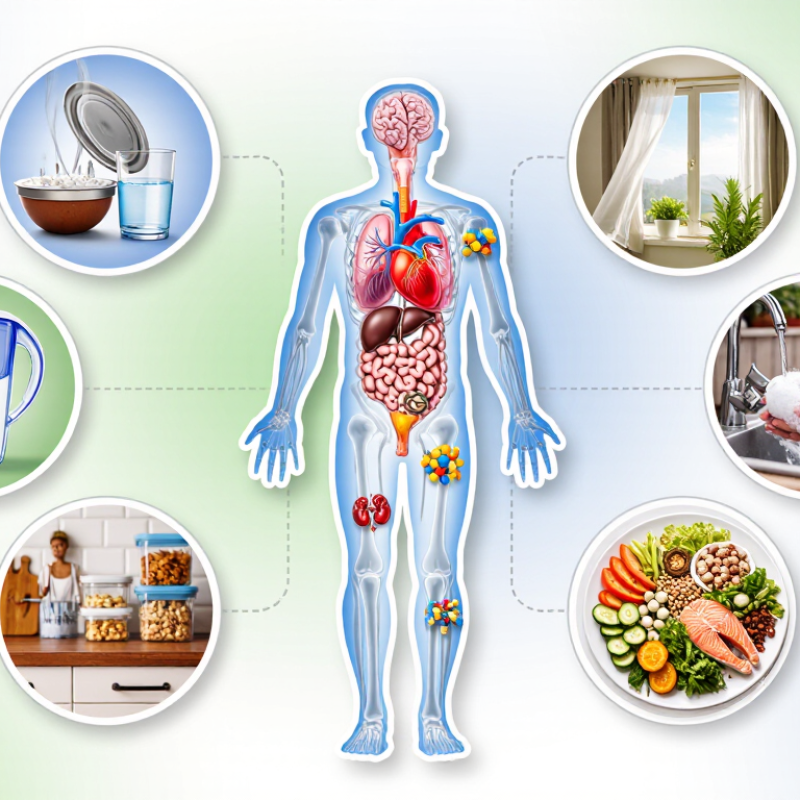
7 Best Ways to Reduce Microplastics in the Human Body?
Microplastic exposure usually begins before particles reach the body. We may swallow them in drinking water, seafood, salt, and food touched by plastic packaging. Airborne fibers also enter through household dust and indoor air. Synthetic clothes, carpets, and furniture can release tiny threads during use and washing. Tire wear adds particles to roadside dust, which can travel indoors on shoes.
Small changes help. Use filtered tap water when it is safe locally, and store drinks in glass or stainless-steel containers. Avoid heating food in plastic, especially in microwaves. Choose fresh foods with less packaging, then rinse produce under running water. Wash hands before meals. Wet-mop floors and wipe surfaces instead of dry dusting, which can stir particles into the air. Ventilate rooms and wash synthetic fabrics less aggressively when practical.
No routine can remove every particle. Dust matters. Evidence about the body’s long-term response is still developing, and “detox” products often promise more than research supports. Scientists have detected microplastics in human tissues, but the exact health risks remain uncertain. That uncertainty deserves honesty, not panic. I would focus on repeated daily exposure, such as hot takeaway food in plastic or visible indoor dust, rather than chasing perfect purity. Building habits around safer storage, cleaner air, and less disposable packaging is practical, though not flawless.
Reducing microplastic exposure can begin with the water you drink every day. Current research suggests that filtration may lower some particles, but no household method removes every contaminant. Choose a filter designed for particle reduction, and check its instructions carefully. Some systems use fine membranes, while others mainly improve taste. Replace cartridges on schedule. An old filter may become less effective.
Tips: Keep drinking water in glass or stainless-steel containers when practical. Avoid leaving plastic bottles in hot cars or direct sunlight. Heat and repeated use can increase particle release from some packaging. Tap water passed through a maintained filter is often a sensible everyday choice. Still, local water quality matters, so review public testing reports when available.
Beverage choices also deserve attention. Plain filtered water usually creates fewer packaging concerns than drinks sold in single-use plastic containers. Unsweetened tea or coffee prepared at home may reduce contact with disposable packaging. However, paper cups often contain plastic linings, so the risk is not automatically zero. Small changes help, but the science is still developing. I would not promise complete protection, because microplastic exposure also comes from food, air, and household dust. Waist-level habits matter more than perfect routines.
Reducing microplastic exposure begins with everyday food contact. Store hot meals in glass or stainless-steel containers. Heat can increase particle release from some plastics.
A 2020 Nature Food study reported up to 16.2 million microplastic particles per litre from polypropylene infant bottles during heating and shaking. The study also detected billions of nanoplastic particles.
Let food cool before covering it. Avoid microwaving plastic, even when labelled microwave-safe. Transfer soup, rice, or tomato sauce into glass before reheating. Acidic and oily foods deserve extra care. They may interact more strongly with certain packaging materials.
Replace scratched, cloudy, or warped containers. Damage creates more surface area for wear. Small changes matter.
Wash reusable plastic by hand with a soft sponge. Harsh scrubbing can shed fragments. Do not pour boiling liquids into disposable containers. Use filtered tap water when practical, and clean preparation surfaces regularly.
The World Health Organization’s 2019 report found insufficient evidence to confirm health risks from microplastics in drinking water. The United States Food and Drug Administration also says current evidence does not establish a clear danger from detected levels in food.
That uncertainty should encourage care, not panic. I still use plastic sometimes; complete avoidance is unrealistic. The better goal is reducing heat, friction, and long contact time.
Microplastics can enter indoor air when dust and synthetic fibers become airborne. Carpets, upholstered furniture, curtains, and fleece clothing may release tiny particles through friction. A sunlit room can reveal them: fine dust drifting above a sofa or settling on a windowsill. Research on health effects remains incomplete, so reducing exposure is a sensible precaution, not a proven treatment.
Ventilate rooms when outdoor air quality is acceptable, especially during cleaning or vigorous movement. Use a vacuum with effective fine-particle filtration, and empty it carefully outdoors when possible. Damp-mop hard floors and wipe shelves with a wet cloth. Dry dusting can lift particles back into the air. Wash synthetic blankets and clothes as directed, then avoid shaking them inside. A washable entry mat can trap dust before it spreads. Small changes help.
For heavy dust, wear a well-fitting particulate mask and keep children away during cleaning. Improve airflow, but do not assume every purifier removes microplastics. Check its tested particle performance. I still miss hidden dust under beds and behind radiators. That limitation matters. No household routine is perfect, and evidence on long-term inhalation risks is still developing. Track what works in your home, particularly if anyone has asthma or other breathing problems. Seek medical advice for persistent symptoms rather than blaming microplastics alone.
| No. | Exposure-Reduction Strategy | Recommended Action | Suggested Frequency or Timing | Why It May Help | Important Limitation |
|---|---|---|---|---|---|
| 1 | Remove indoor dust with a HEPA-filtered vacuum | Vacuum floors, carpets, upholstery, and other dust-collecting surfaces with equipment designed to retain fine particles. Empty or replace the filter according to the equipment instructions. | At least weekly in commonly used rooms; more often in homes with pets, children, or visible dust. | Indoor dust can contain synthetic fibers and other particles. Efficient filtration and regular dust removal can reduce the amount of settled material that becomes airborne again. | HEPA filtration reduces airborne particles but does not specifically identify or eliminate every microplastic particle. |
| 2 | Use damp cleaning instead of dry sweeping | Wipe hard surfaces with a damp microfiber-free or washable cloth and mop floors with water or an appropriate cleaning solution. Avoid vigorous dry dusting. | Weekly, and whenever visible dust accumulates. | Damp cleaning helps capture settled dust instead of stirring it into the breathing zone. | Cleaning cloths should be washed separately when possible, because washing can release fibers into wastewater. |
| 3 | Improve ventilation during dusty activities | Increase outdoor-air ventilation when outdoor air quality is acceptable, especially while cleaning, handling dusty textiles, or renovating. Leave the area temporarily if dust becomes visibly airborne. | During and shortly after dust-generating activities. | Ventilation can dilute indoor airborne particles and help remove suspended dust from occupied spaces. | Open windows may increase indoor pollutants when outdoor air contains smoke, traffic pollution, pollen, or other contaminants. |
| 4 | Reduce indoor shedding from synthetic textiles | Limit unnecessary handling, shaking, or vigorous brushing of polyester, nylon, acrylic, and other synthetic fabrics indoors. Store clean textiles in closed cupboards or containers. | Use source-control practices whenever textiles are handled or stored. | Friction and disturbance can release textile fibers into household dust and indoor air. | Natural fibers can also produce airborne fibers and dust; replacing all synthetic textiles is not necessary or guaranteed to remove exposure. |
| 5 | Dry synthetic laundry outdoors or in a ventilated area | When practical, air-dry synthetic clothing and household textiles outdoors or in a well-ventilated space rather than using indoor air-drying in occupied rooms. | For each load of synthetic laundry, when weather and local air quality permit. | Drying and handling textiles can release loose fibers. Keeping this activity away from occupied indoor air may reduce inhalation of shed fibers. | Outdoor drying is not appropriate during poor air quality, extreme weather, or where outdoor contamination is a concern. |
| 6 | Wash hands after cleaning or handling dusty materials | Wash hands with soap and water after vacuuming, dusting, handling worn synthetic clothing, or working with household dust. Avoid touching the mouth during these activities. | Immediately after dust-generating tasks and before eating. | Hand hygiene can reduce transfer of dust and fibers from hands to the mouth, helping address incidental ingestion in addition to inhalation. | Handwashing does not remove particles already inhaled and should not replace ventilation or dust control. |
| 7 | Control dust at the source during repairs and hobbies | Use local exhaust ventilation, wet methods, protective barriers, and appropriate respiratory protection when sanding, cutting, drilling, or working with dusty materials. Keep children and non-workers away from the area. | Every time a dust-generating activity is performed. | Source control prevents fine particles from spreading through the home and limits inhalation exposure during high-dust tasks. | Respirators must fit correctly to work effectively, and no household measure can eliminate all airborne particles. |
The phrase “reduce microplastics in the body” needs careful interpretation. Research has detected plastic particles in human tissues and fluids, but the health effects remain uncertain. No approved detox treatment can reliably remove them. Be cautious with supplements, cleanses, and dramatic online claims. They often rely on laboratory findings rather than strong human evidence.
Practical exposure reduction is more defensible. Do not heat food in plastic containers, especially when they are scratched or worn. Use glass or stainless steel for hot meals and drinks. Store leftovers away from direct sunlight. Wash your hands before eating, and clean household dust with a damp cloth. Good ventilation may also reduce airborne particles indoors. Small changes matter.
Drinking-water advice depends on local quality and filtration performance. A certified filter may reduce some particles, but results vary by device and maintenance. Follow public-health guidance instead of assuming bottled water is safer. Current scientific reviews still contain major gaps, including long-term exposure levels and vulnerable groups. That uncertainty should shape the language we use. I would not promise a “clean body.” I would choose lower-exposure habits, check credible evidence, and discuss persistent concerns with a qualified healthcare professional.
Evidence-informed priorities based on exposure pathways and current research. The score reflects the strength and practicality of exposure-reduction evidence, not a proven percentage reduction in body burden.
How to interpret the chart: Prioritize actions rated higher, especially avoiding unnecessary heating of food in plastic and reducing reliance on bottled water where safe tap water is available. Use glass or stainless steel for storage, wash hands before eating, damp-dust and ventilate indoor spaces, and reduce unnecessary synthetic-textile washing. Filtering may reduce some particles, but performance depends on the filter and particle size.
Evidence context: Microplastic measurements vary substantially by sampling and laboratory methods. Human-health effects and long-term reductions in internal body burden remain uncertain. Sources include WHO, “Dietary and inhalation exposure to nano- and microplastic particles” (2022); EFSA scientific reviews on microplastics in food; Mason et al., Frontiers in Chemistry (2018); and studies of household dust, textiles, and food-contact materials.
A suitable filter may reduce some particles, but no household system removes every contaminant. Check its instructions carefully.
Use glass or stainless steel when practical. These containers reduce direct contact with plastic during daily drinking.
No. Heat and sunlight may increase particle release from some packaging. A parked car can become very hot.
Follow the replacement schedule. An old cartridge may work less effectively, even when the water still tastes normal.
Plain filtered water usually creates fewer concerns than drinks in single-use plastic containers. Homemade tea or coffee can also help.
Not always. Many paper cups have plastic linings, so the concern is reduced, not eliminated.
Let soup, rice, or sauce cool first. Store it in glass or stainless steel containers whenever possible.
It is better to transfer food into glass before reheating. Even microwave-safe plastic may not remove every concern.
Damage creates more surface area for wear. Scratched containers can shed fragments more easily, though the exact amount varies.
Probably not. I still use plastic sometimes. Reducing heat, friction, and long contact time feels more realistic.
Microplastics can enter the body through food, drinking water, household dust, and contact with plastic materials. A practical approach begins with identifying common exposure sources and making simple daily changes. Filtering drinking water when appropriate and choosing lower-risk beverages may help reduce ingestion. Storing food in glass, stainless steel, or other durable containers, avoiding unnecessary plastic contact with hot food, and using safer preparation methods can also limit the release of plastic particles.
Reducing indoor dust and synthetic fibers is another useful step. Regular cleaning, ventilation, and careful handling of synthetic textiles may lower the amount inhaled. Although many people search for how to detox microplastics from the human body, there is currently no proven cleansing method that can reliably remove them. Instead, focus on reducing ongoing exposure, maintaining a balanced diet, drinking adequate water, and following trustworthy, evidence-based health guidance. Be cautious of products or claims that promise rapid detoxification without strong scientific support.

Health Line