Basic Information
Model NO.
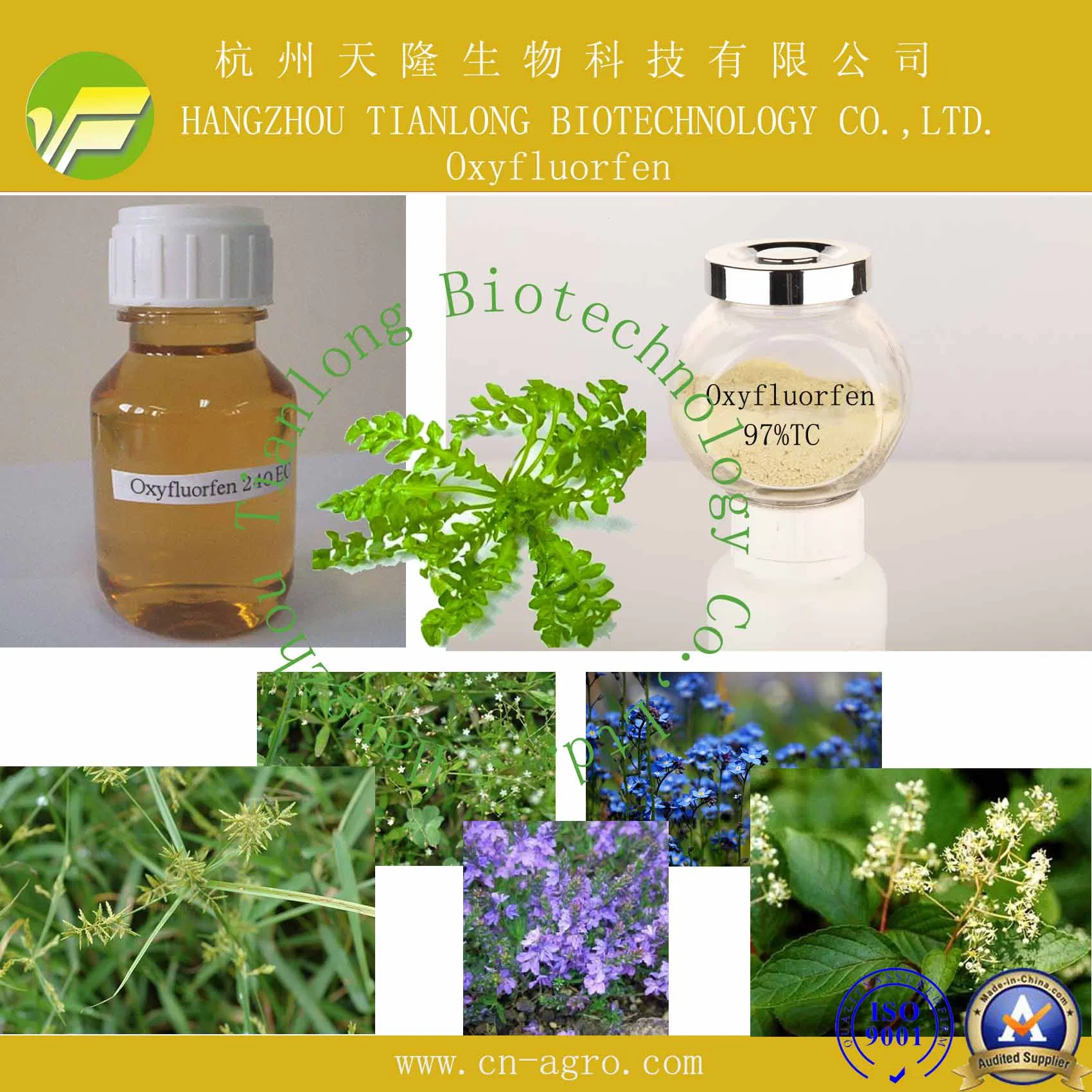
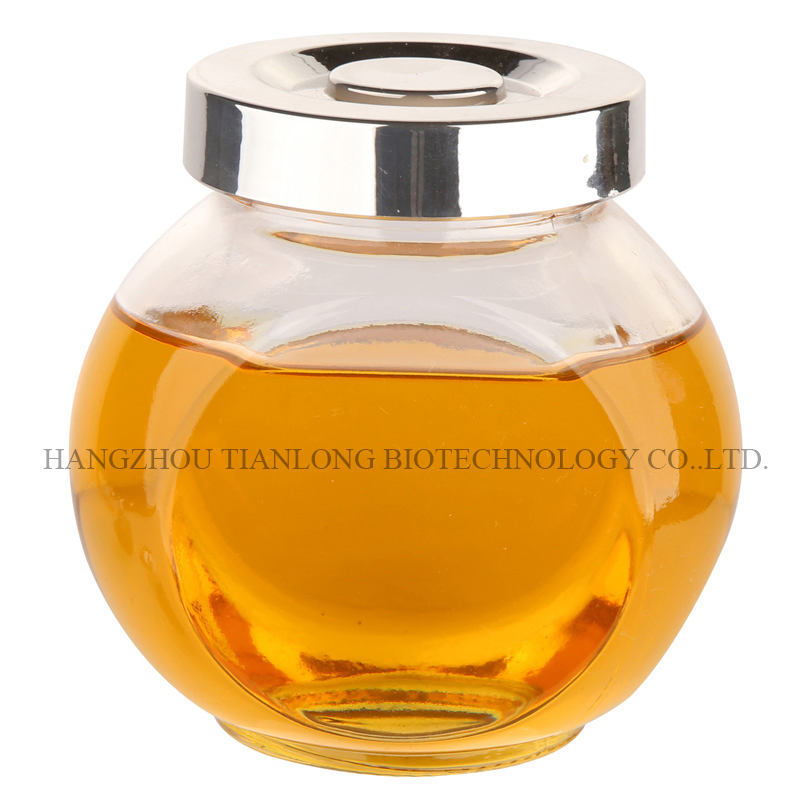
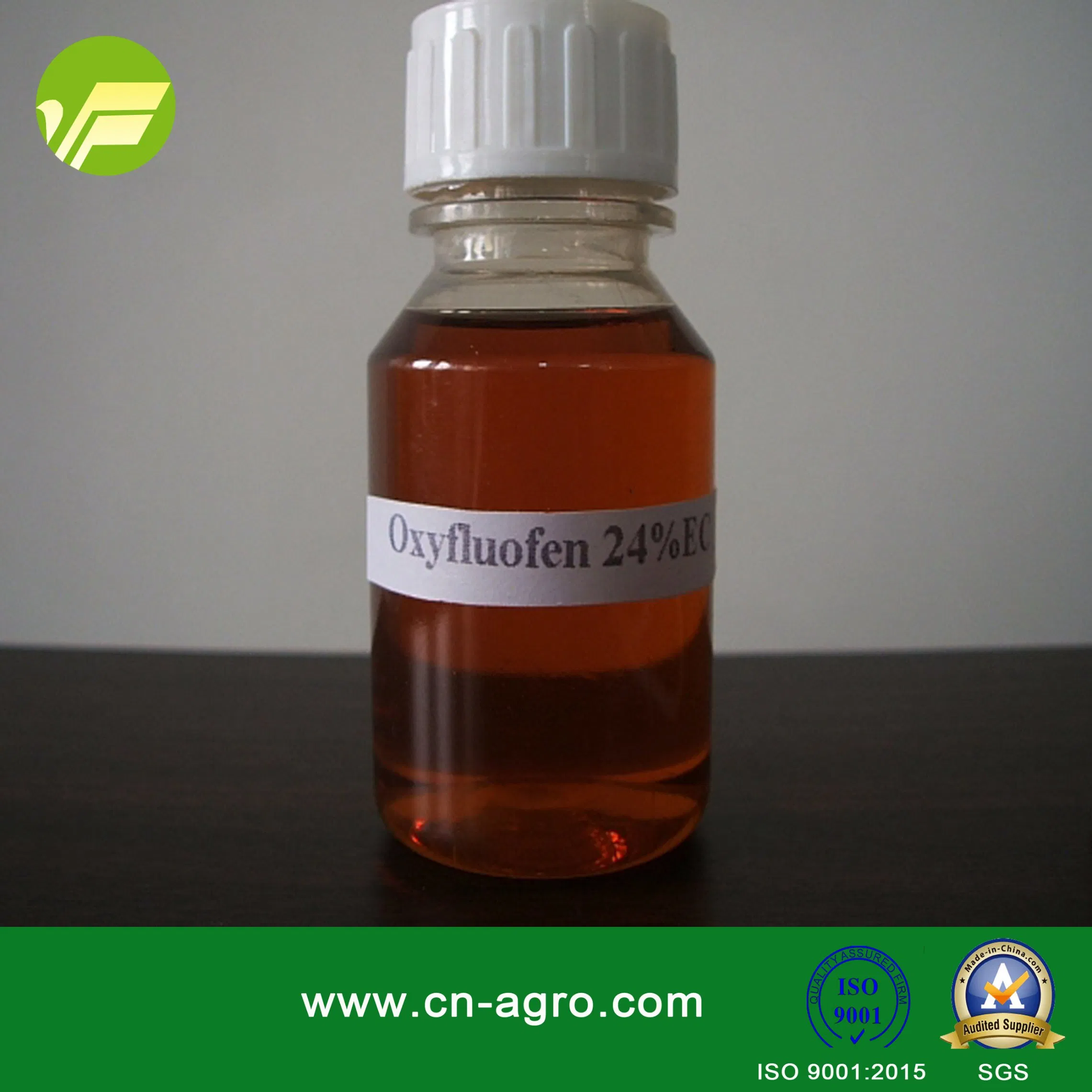
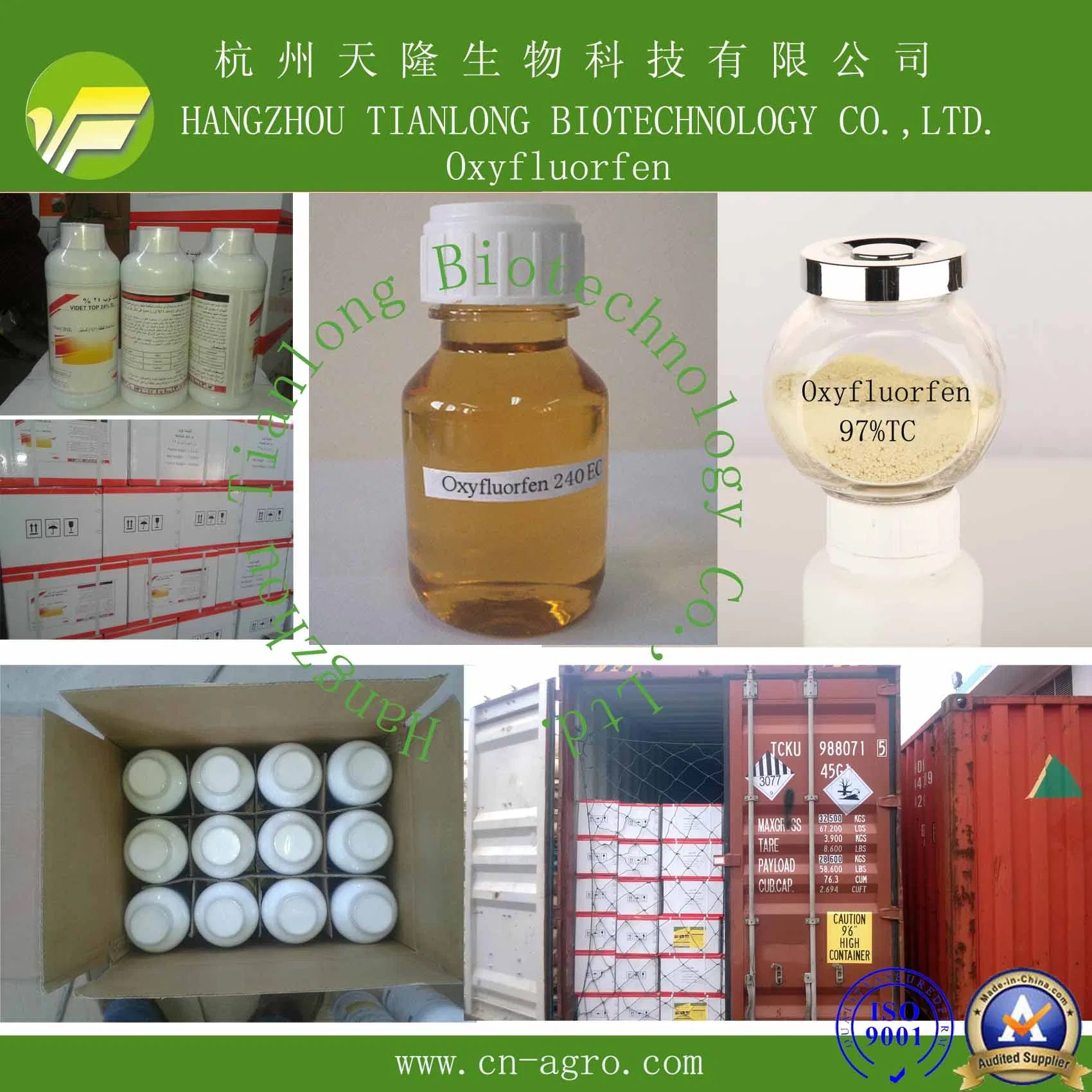
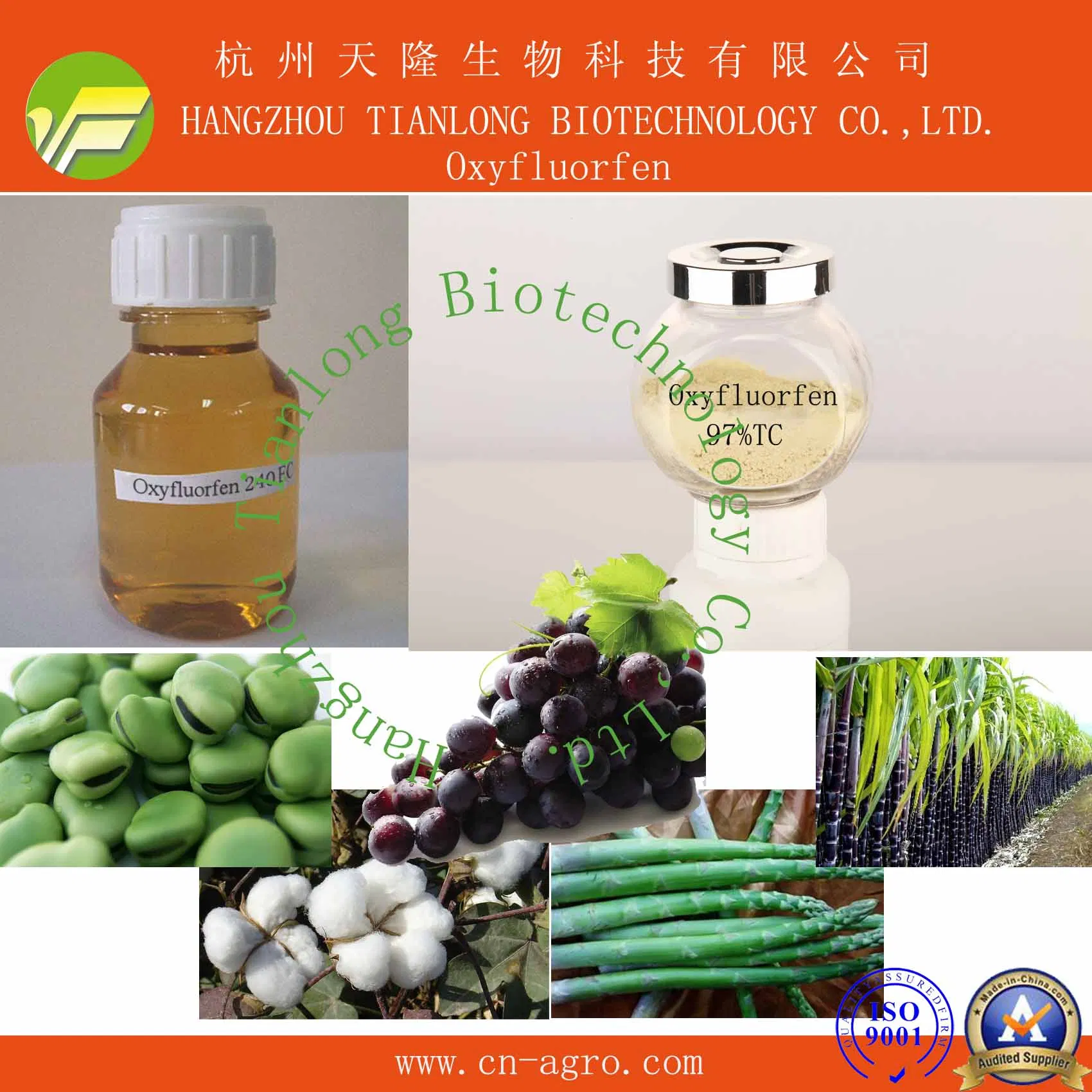
Oxyfluorfen (98%TC, 240g/L EC)
Method of Application
Cauline Leaf Treatment
Specific Conductivity
The Tag Type Herbicides
Colour
White to Orange or Red-Brown Powder
Product Parameters
Common name: Oxyfluorfen
Other names: Oxyfluorfen (BSI, E-ISO, ANSI, WSSA); Oxyfluorfene ((m) F-ISO)
IUPAC name: 2-chloro-α , α , α -trifiuoro-p-tolyl-3-ethoxy-4-nitrophenyl ether
Chemical Abstracts name: 2-chloro-1-(3-ethoxy-4- nitrophenoxy)-4-(trifluoromethyl)benzene
CAS No: [42874-03-3]
Type: Herbicide
Molecular Formula: C15H11ClF3NO4
Molecular Weight: 361.7
Physical Chemistry
Form (appearance): Orange, crystalline solid.
Melting Point: 85-90º C; (tech., 65-84º C)
Boiling Point: 358.2º C (decomp.)
Vapor Pressure: (pure a.i.) 0.0267 MPa (7-5º C)
Specific Gravity: 1.35 (73º C)
Solubility: In water 0.116 mg/l (25º C). Readily soluble in organic solvents (Acetone, Chloroform, etc.).
Stability: Stable up to 50º C. Decomposed rapidly by U.V. irradiation.
Application & Usage
Formulation types: EC; GR.
Biochemistry: Protoporphyrinogen oxidase inhibitor.
Mode of action: Selective contact herbicide, absorbed more readily by the foliage and shoots than by the roots, with very little translocation.
Uses: Control of annual broad-leaved weeds and grasses in tropical and subtropical crops (tree fruit, vines, nuts, cereals, maize, soya beans, peanuts, rice, cotton, onions, garlic, etc.) at rates of 0.25-2.0 kg a.i./ha.
Mammalian Toxicology
Oral: Acute oral LD50 for rats and dogs >5000 mg/kg.
Skin and eye: Acute percutaneous LD50 for rabbits >10000 mg/kg. Mild irritant.
Inhalation: LC50 >5.4 mg/l.
ADI: 0.003 mg/kg.
Ecotoxicology
Birds: Acute LD50 for bobwhite quail >2150 mg/kg.
Fish: LC50 (96 h) for bluegill sunfish 0.2 mg/l, trout 0.41 mg/l.
Bees: Not toxic to honeybees at 0.025 mg a.i./bee.
Certificate of Analysis
| Item |
Index |
Result |
| Commodity name |
Oxyfluorfen 24%EC |
| A.I. content % |
≥24.0 |
24.3 |
| Water, % |
≤0.5 |
0.4 |
| pH value |
6.0-9.0 |
6.7 |
| Cold stability |
Qualified |
Qualified |
| Emulsifiable stability |
Qualified |
Qualified |
| Appearance |
Unclear liquid, free from visible suspension |
Frequently Asked Questions
Q1: What is Oxyfluorfen primarily used for?
It is a selective contact herbicide used to control annual broad-leaved weeds and grasses in a variety of tropical and subtropical crops.
Q2: How does Oxyfluorfen work on plants?
It acts as a protoporphyrinogen oxidase inhibitor. It is absorbed more readily by the foliage and shoots than by the roots, with very little translocation within the plant.
Q3: Which crops are compatible with Oxyfluorfen treatment?
Compatible crops include tree fruits (including citrus), vines, nuts, cereals, maize, soya beans, peanuts, rice, cotton, onions, garlic, and ornamental trees.
Q4: Is Oxyfluorfen mobile in the soil?
No, it is strongly adsorbed on soil, not readily desorbed, and shows negligible leaching, making it environmentally stable in soil structures.
Q5: What are the main formulation types available?
The most common formulation types are Emulsifiable Concentrate (EC) and Granules (GR).
Q6: What is the environmental impact on aquatic life?
Oxyfluorfen shows toxicity to fish, with LC50 values for species like bluegill sunfish and trout ranging from 0.2 to 0.41 mg/l.
 Health Line