Explore our state-of-the-art technological solutions integrated directly with global health standards, bio-monitoring systems, and regulatory environments.
Pulse oximeters have evolved from specialized, bedside clinical instruments into ubiquitous devices critical to modern healthcare delivery. By continuously monitoring arterial blood oxygen saturation (SpO2) and pulse rate using non-invasive photoplethysmography (PPG), these devices serve as the first line of defense in respiratory health management. The global market is shaped by a dual demand: high-precision clinical-grade equipment for hospitals and intensive care units (ICUs) on one end, and highly cost-optimized, wearable, or handheld devices for Home Patient Care and Telemedicine on the other.
Sourcing decisions for international medical device distributors, healthcare groups, and retail giants hinge upon finding factories that balance strict adherence to ISO 13485 quality systems, state-of-the-art optoelectronic engineering, and resilient global supply chains. This document dissects the core technological parameters, manufacturing excellence factors, and regulatory structures that separate elite pulse oximeter factories from standard assembly shops.
Understanding the technological transition in photoplethysmography (PPG) and sensor integration is vital for strategic product planning.
Traditional pulse oximetry uses red and infrared light. The next generation of devices integrates green, orange, and multi-spectral sensors. This array reduces motion artifacts, enables accurate readings across diverse skin pigments, and facilitates the continuous monitoring of methemoglobin and carboxyhemoglobin.
On-chip microcontrollers are running lightweight machine learning algorithms directly on the pulse oximeter. By processing raw plethysmographic waveforms, devices can predict acute hypoxic events minutes before oxygen saturation levels drop below clinical thresholds.
Medical OEMs are shifting toward integrated low-energy Bluetooth (BLE), cellular IoT (NB-IoT), and Wi-Fi modules. Standard oximeters are now edge nodes feeding secure API pipelines directly into Hospital Information Systems (HIS) and remote patient monitoring (RPM) apps.
Why do global medical brands maintain deep supply relationships with Chinese manufacturers? It is not merely a question of unit cost, but of **unparalleled ecosystem resilience**. The Yangtze River Delta and Pearl River Delta hubs boast the world's most concentrated clusters of raw materials, electronic components, optoelectronic testing systems, and specialized medical plastic injection facilities.
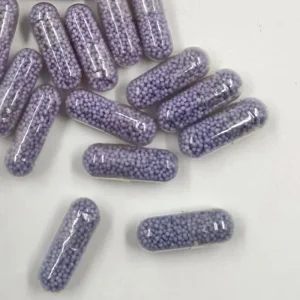
Shanghai Health Line Co., Ltd. is a leading high-tech enterprise specializing in the development, extraction, production, and sales of active ingredients derived from natural plant medicines. We focus on producing traditional Chinese medicinal plants rich in selenium from the Qinba region, as well as pharmaceutical raw material intermediates and raw materials for health care products. Our commitment to excellence in quality and innovation has established us as a trusted partner in the industry.
With a strong focus on sustainability and the use of natural resources, we proudly harness the benefits of locally sourced, selenium-rich plant varieties. As a company that combines centuries-old traditional Chinese medicine practices with cutting-edge technology, we are at the forefront of developing effective, high-quality natural medicines and health products.
As medical device markets align with preventative and holistic healthcare, monitoring biological vitals (like oxygenation using Pulse Oximeters) goes hand-in-hand with metabolic and botanical intervention programs. Shanghai Health Line Co., Ltd. acts as a core ecosystem supplier, bridging the gap between active botanical ingredients and modern diagnostic monitoring equipment.
Shanghai Health Line Co., Ltd. aims to be a pioneer in the global natural medicine industry by continuing to innovate, improve product quality, and promote the use of traditional Chinese medicine for health and wellness. We are dedicated to developing products that promote a healthier lifestyle and ensure sustainable growth for the company, our partners, and the communities we serve.
At Shanghai Health Line Co., Ltd., we are committed to maintaining the highest standards of quality, safety, and customer satisfaction. With our state-of-the-art technology, experienced workforce, and ethical practices, we aspire to be a trusted leader in the field of natural plant medicine production, providing our clients with the best possible solutions for their health and wellness needs.
Sourcing the right configuration depends entirely on the environment where the pulse oximeter operates.
Infant monitoring requires soft wrap-around sensors, multi-wavelength algorithms that correct for low perfusion, and strict calibration protocols to prevent false positive alarms while guaranteeing safe LED thermal emission profiles.
Athletic oximeters must resist sweat and shock, function reliably in freezing temperatures, and provide rapid Perfusion Index (PI) readings to monitor physiological adaptation to hypoxic mountain or training environments.
Home monitoring for COPD and congestive heart failure relies on simple, single-button interfaces, automatic cellular uploads, and battery optimization that allows the device to stay functional for months without recharging.
Entering international markets requires absolute compliance with national medical regulatory bodies. A verified Tier 1 Pulse Oximeter manufacturer must possess documentation proving conformance to key international frameworks:
Required for medical-grade sales in the United States. Class II medical devices require validation studies under hypoxic conditions compared against a reference co-oximeter (CO-Oximeter blood sample calibration).
European Union markets mandate strict compliance with the Medical Device Regulation. Devices must have verified clinical evaluation reports, post-market surveillance plans, and an assigned Unique Device Identification (UDI).
The definitive standard detailing the specific requirements for the basic safety and essential performance of pulse oximeter equipment, outlining accurate measurement ranges and calibration methods.
Accuracy is primarily driven by three factors: the stability and calibration of the red (660nm) and infrared (940nm) light-emitting diodes, the quantum efficiency of the photodiode receiver, and the artifact rejection algorithm. Premium factories calibrate each batch using human blood gas analysis correlation (Bland-Altman plots) to establish reference tables.
The Perfusion Index represents the ratio of the pulsatile blood flow to the non-pulsatile static blood flow. Devices with high sensitivity can read SpO2 levels even in patients with weak peripheral blood circulation (low perfusion down to 0.2%), which is critical in ICU and neonatal clinical settings.
Under the EU MDR, most clinical-grade non-invasive pulse oximeters are classified as Class IIa. Continuous, life-support monitoring configurations or invasive oximetry probes fall under the more stringent Class IIb classification, requiring deeper clinical investigation and more intensive oversight from notified bodies.
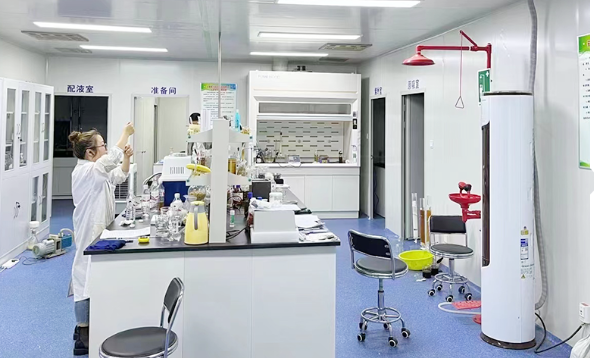
We leverage low-temperature chromatographic separation in our GMP-compliant workshops to extract high-yield, high-purity active botanical ingredients. This processes raw botanical compounds without thermal degradation, matching international standards.
Explore additional health formulations, advanced chemical inputs, and physical therapeutic equipment engineered to meet global quality demands.
 Health Line